
Migration is Beautiful
"Meet powerhouse artist/activist Favianna Rodriguez — a leading voice in the movement of artists raising awareness about U.S. immigration issues."
- I am OTHER

Harvest of Empire
The Untold Story of Latinos in America “We are all Americans of the New World, and our most dangerous enemies are not each other, but the great wall of ignorance between us.”
Juan González, Harvest of Empire

Featured Post
Migration is Beautiful | Favianna Rodriguez | I am OTHER
"Meet powerhouse artist/activist Favianna Rodriguez — a leading voice in the movement of artists raising awareness about U.S. ...

Showing posts with label identity. Show all posts
Showing posts with label identity. Show all posts
Monday, March 16, 2015
LABELS by xicana artist Monica Villareal
By xicana artist Monica Villareal. pic.twitter.com/GeaRVVXg0w
— Cassandra (@gringatears) March 16, 2015

Thursday, November 20, 2014
We define ourselves as a nation of immigrants. That’s who we are—in our bones.
“We define ourselves as a nation of immigrants. That’s who we are—in our bones." —President Obama: http://t.co/niZoNzZNFY #ImmigrationAction
— The White House (@WhiteHouse) November 20, 2014
Sunday, November 9, 2014
Human Beans - Kickstarter campaign
I am re-blogging the Human Beans article below for a blogger friend, Tracy Jackson.
Human Beans are an interesting idea that goes beyond simple M&M's that all taste the same even though they are colored differently.
These jelly beans are flavored differently than what you would expect by their color.
These can be used to stimulate dialog toward racial justice in the way that Lee Mun Wah's "What Stands Between Us: Racism Conversation Flash Cards" are used.
Check out her suggestions and her Kickstarter campaign below.
The Quick, Easy and Fun Way to Talk to Kids about Diversity

For me, teaching diversity is a passion. I know how it feels to be excluded and judged, so I devised a simple method to teach children to embrace what makes each of us unique. I call it, Human Beans. Human Beans are a gourmet jelly bean treat that encourages simple conversations powerful enough to stop bullying in its tracks.
Here’s how it works:
#1: Open a Bag of Conversation
Nothing is more natural than sharing a treat with your child. When you tear into a package of Human Beans, you open a simple platform for talking to your child. You see, Human Beans are just like people. They come in different colors but you can’t really determine what’s on the inside simply by looking at the outside. You have to get involved and actually experience the bean to know its flavor.
#2: Choose a Bean, Any Bean
Take time to ask your child which bean is his/her favorite. Ask how they choose the bean. What flavor do they think it will taste like? Why? Have them eat their bean.
Once the discussion gets rolling you can chat about friends or neighbors who may look different from you on the outside but are very similar on the inside. Human Beans come in six colors and twelve flavors all mixed up in one lovable bag. Just like the people in your life! Take a moment to talk about differences and similarities and how sometimes people think a person is one way just by how they look (act, think or feel). Just like Human Beans, we don't know anything about a person without experiencing them first.
#3 Spill the Beans
Simple conversations lead to life changing ones. Once your child understands the concept of diversity, encourage them to share the lesson with their friends. Human Beans can teach children about respecting others, appreciating differences and standing up for others.
Regardless of how you choose to use these suggestions, don’t just sit on the idea and forget about it. Put it to good use so your kids can learn to embrace both themselves and others, which is what every parent wants right? Of course!
Tracy Jackson is a military wife and mother to three girls, social justice advocate and veteran entrepreneur that is passionate about diversity and teaching children to love themselves and others. For more details on Human Beans, please check out her Kickstarter project and help make the world a little sweeter!
###
Thank you for the consideration!
For more information, please contract Tracy Jackson:
Direct phone: 405-426-9706
Wednesday, March 28, 2012
The Moth Podcast with Joyce Maynard: Something is A Breast

Sunday, November 20, 2011
Overriding Identity / Watch the Stereotyping
In sociology class I learned that when someone commits a horrendous crime that person's new identity becomes synonymous with that criminal act. No matter how that person self defined in the past - they will now have a new identity that society places on them.
History and media together constantly contribute stereotypes to whole populations. Growing up in the U.S. I've seen enough WWII movies to where my brain is now wired to identify Germans as "those holocaust perpetrators". I know; unfair to every new innocent German baby.
Another lesson from my sociology class and from a psychology teacher is that all stereotyping is bad. I knew that applying negative stereotypes to a whole population was bad, however, not until I made a video about positive stereotypes did I realized that positive stereotyping is equally wrong. Attempting to apply positive stereotypes to a whole population is akin to saying all other people do not have that said positive quality.
I think this explains why I feel uncomfortable when I watch this video that I made. Lesson learned. Kudos to all the sociology students that participated though.
The list of stereotyping oversimplifications (positive or negative) can go on and on. Hollywood does an "excellent" job of reinforcing stereotypes. I've also noticed stereotyping in cartoons that my daughter watches.
U.S. media is complicit in creating an Overriding Identity fallacy by calling undocumented immigrants "Illegal Aliens". U.S. media is attempting to make it vogue to hate on Hispanic Latino Mexicas because of the labels applied to them that "criminalizes" the whole group.

When a person breaks the speed limit, U.S. media will not label that person illegal. The media should not label undocumented immigrants illegal either. It's dehumanizing and has incited hatred toward Hispanic Latino Mexicas from U.S. citizens.
The "war" on drugs is another dehumanizing word choice that government and media use. There is no need for a "war" on drugs. There is a need to provide help to drug addicts.

What Overriding Identity issues have you noticed that the media perpetuates.
===
Glenn is a European-American married to a Mexican-American. They have two children. Glenn is interested in progressive immigration reform, and desegregation within schools and communities. He is a life long learner with interests in sociology, anthropology, psychology, history and politics.
Connect to Glenn at CommunityVillage.us
Sunday, October 9, 2011
Why are European Americans called 'White'?
I suspect that most European-Americans don't know the origin of the 'white' label. To me, if a European American labels themselves 'white' they are accepting membership to the 'white' club - and that 'white' group has a legacy of greed of land and labor, suppression (of national identity), xenophobia, segregation, racism, oppression and abuse of non-whites.
To learn more about 'White' identity, check the book The History of White People by Nell Irvin Painter

Sunday, October 2, 2011
A Native American's Perspective on Colonialism
I found this forthright message buried in comments on racialicious. Emphasis is mine.
"I am a Native woman
reading this posting and it's fascinating. Practically, we need to understand what colonialism means to the average American and how it works in your life right now in very simple terms, then we really can start asking bigger questions. Knowing how you passively (and aggressively when you say that the issue is too old to do anything about) protect the status quo, the very same status quo you say you want to change, we can finally see the hegemony that never gets pointed out and really throw it out.
We buy into colonialism most easily and pervasively in these ways:
1. A belief that
Native peoples are extinct or decimated or have no influence today. ---- This simply is not true. There are over 500 tribes still here in the US alone, nearly every single major city has meeting houses, centers, coalitions that work with the State, city and county governments. Native peoples are struggling with protecting land sites in practically every state in the nation, or are fighting for the right to be recognized as Nations by the State or Feds, or are protesting offensive mascots, misappropriation of religious beliefs by ignorant fiction writers, fake shamans, and young republicans, the list goes on. If you want to help any of these causes there is one in your back yard to get involved in.
Who reading this is still a fan of the Atlanta Braves or Washington Red Skins? Confronting a massive money making organization like a sports team, who has the balls to do that? Just Google it to see the death threats and violence over the years perpetrated again Native people fighting just one simple injustice. We could use the help.
2. A belief that
Native/indigenous cultures are primitive, ie, the beginning of the Darwinian scale of evolution. If Europeans had never "found" the western hemisphere the people would have inevitably evolved into cultures and technologies like Europeans --- This is the basis for the ability to discount Indigenous people’s intelligence (around the globe) and therefore any and all ability to make decisions and participate meaningfully in Western society and therefore the reasoning for laws enacted to take away basic rights. Just think about how Native people figure in your mind? What happens when you think of the word “tribe”? Can you consider changing your automatic mental assumption that goes with that word? By the way Native people are NOT a version of European or Asian culture. If one can allow one’s brain to wrap around this concept, it is a civilization of its own World View--- a World View based on a massively intelligent understanding of the concept of “relationship.” This is why we have thousands of words to describe relatives, friends, and our relationship to the world around us. This is why we didn’t deforest the N. American continent, or make animals go extinct. (If you immediately think of the Wooly Mammoth, or “the Mayans,” there you go again protecting your status quo!) In contrast, Europe had/has a basic world view concept of valuing things, and having dominion over things rather that having relationships. English has thousands of words to describe quantify and value--- interesting that capitalism evolved from that mind set.
3. A belief that only
Native culture changed because of Euro contact --- Both cultures had an influence but no one ever acknowledges just how much European culture changed and adopted Native practices and ways of looking at relationship with their fellow human. Europe was steeped in the feudal system when contact with Indigenous peoples happened. This truly was the first time the average Joe saw what the word “freedom” actually meant, soon to follow were revolutions of class and gender in Europe. European culture drastically changed because of being exposed to a new World View that valued people over things. When the US formed its constitution it was heavily borrowed from the living example of the Iroquois and other tribes, not really as much from the dead distant recreation of the Greeks. When the rules of congress where being created, the founders decided to not do what happens in the British parliament, where everyone argues points at once while the main speaker is talking. They decided to follow the Native American example of allowing one person to speak uninterrupted. What we’re doing in this blog today. The society we live in today is much more Native in root than we are ALLOWED to believe. Nativeness is encouraged to be invisibilized.
4. A belief that
"I" have no relationship with Native Americans right now, especially if my ancestors weren't historically involved in "Indian wars" or are "new" immigrants --- The status quo benefits from the silence and ignorance of Native people, Native issues, and those who have been trained to believe that this issue is too hard to understand. Native people only got the right in 1978 to practice our religion, to not have our children unjustly placed in white homes, and to speak their language. At 34, I am the first generation in my family to not have a government program dictate major life choices. If you want to help Native people and issues, write to your congressman and ask them to support treaty enforcement and basic human rights for Indigenous people in this country and globally. To stop upholding the status quo on colonization in this country and around the world, know the fights Native people are currently engaged in. They are human rights struggles.
If you do nothing else, start seeing Native people, start seeing Nativeness. It’s everywhere. Stop supporting movies and images and sports teams that continue to perpetuate stereotypes and make money off the image, story, oppression of Native people. Write to Disney, say stop selling Pocahontas dolls, etc. Say something when you see something.
If you’re on the east coast practically every street, highway, city, county, state is a Native American word. Now ask when you see those things, what is the truth? What language is that? What happened here? Who are/were the Native people living on the land I’m on now. And this, my friends, is really what understanding a small piece of Colonization 101 is.
-Rhiana
Tuesday, June 29, 2010
What Creates Our Identity
 |
| Chart by Glenn Robinson of CommunityVillage.us -- click to enlarge |
Charts to assist those who ask
"What are you?"
and
"What am I?"
"What are you?"
and
"What am I?"
 |
| Chart by Charo Robinson |
Make your map free at bubbl.us

Our identity is made up of our culture, our nature and our self.
It has been illegal for the government of France to collect data on ethnicity and race since 1789.
However, civil rights lawyers in the U.S. use 'race' data to prove discrimination.
Colors are not races.
People are Tints and Shades of flesh color.
 Original photo from National Geographic.
If there were black and white people, their offspring would be grey.


"Citing Blumenbach by name, Emerson agrees that races shade into each other imperceptibly."
-Nell Irvin Painter, The History of White People
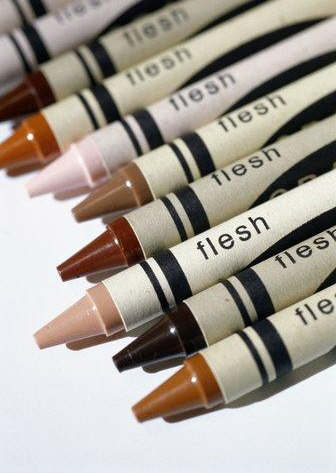 The 'race' check boxes are not derived from physical science, but from political science with an underlying ideology of exclusion.

Makeup from brushesbykaren


Hair from headkandy
In 1997, the American Association of Physical Anthropologists urged the American governmnet to phase out the use of race as a data category and to substitute ethnic categories instead. Geneticists studying DNA ... were also concluding that race as a biological category made no sense. --Nell Irvin Painter
Some chapters from the book
"Modernizing the U.S. Census"
Modernizing the U.S. Census
Modernizing the U.S. Census
Modernizing the U.S. Census
YouTube response explaining One Human Race
Here is the information I could not find on the US census website. The answers to the questions: How many 'race' categories does the US feel are worthy of recognizing? Why has the US been collecting data on race and ethnicity? How is the data used?
From the webpage:
A Brief History of Census “Race”
Frank W. Sweet, author of Legal History of the Color Line
Changes in “Racial” Categories
Changes in Stated “Racial” Goals
-Frank W Sweet, A Brief History of Census “Race”
Multiracialism In America - Jane Junn
Choose one or more:
☐ Mixed
☐ Other
☐ Unsure
☐ Don't know
☐ None of your business
Snoop finds out what percentage of Native American, European and African he is.
Should I stop using the word "race"?
Unless you are a physical anthropologist, or discussing the word itself, the word 'race' should be avoided.
Replace the word 'race' with ethnicity. True, the meaning is different, but conversations about human differences usually revolve around ethnic differences.
The term 'race' equates to the noun 'breed'. Humans do not want to be thought of as breeds. -getgln
Nell Irvin Painter
Professor of American History, Princeton
Speaking about the History of White People
Using the term 'race' runs the risk of sounding uneducated, and worse, the risk of sounding racist.
NYTimes.com - Being Multiracial in America
Mixed
Listen at 3:20
Subscribe to:
Posts (Atom)